ph333 Probability in Casino Games
ph333 Probability in Casino Games: A Guide to Smarter Online Gaming
Welcome to the exciting world of online casino gaming, where entertainment meets the thrill of chance. For players in the Philippines, understanding the role of probability in casino games is not just an academic exercise; it's a crucial strategy for enhancing your gaming experience and potentially improving your odds. Here at ph333, we believe an informed player is a successful player. This comprehensive guide will demystify the concept of probability in various casino games, offering insights and practical tips to help you navigate the vibrant landscape of online casinos. Whether you're a seasoned player or new to the scene, grasping these fundamental principles will empower you to make more strategic decisions, manage your bankroll effectively, and truly enjoy the dynamic environment of mobile-first gaming. Let's delve into how probability shapes every spin, every deal, and every bet you make, ensuring you're well-equipped for your next gaming session.
Understanding the Basics of Probability in Casino Games
At its core, probability is the mathematical likelihood of an event occurring. In casino games, this translates to the chances of specific outcomes, such as hitting a certain number in roulette, drawing a particular card in blackjack, or landing a winning combination on a slot machine. Every casino game, whether it's a traditional table game or a modern video slot, operates on a set of probabilistic rules. Understanding these rules is the first step towards becoming a more strategic player.
For instance, in a game of chance like roulette, the probability of the ball landing on a specific number can be calculated based on the total number of pockets. In games of skill like poker, probability helps players assess the strength of their hand and the likelihood of improving it. While you can't change the inherent probabilities of a game, knowing them allows you to make informed decisions and manage your expectations. It’s about understanding the odds, not about predicting the future. This foundational knowledge is key for anyone looking to engage with online casino gaming responsibly and strategically.
House Edge and Return to Player (RTP): What They Mean for You
Two critical concepts directly related to probability in casino games are the House Edge and Return to Player (RTP). These metrics are vital for any player, especially in the context of online casino platforms.
- House Edge: This is the advantage the casino has over the player, expressed as a percentage of the player's original bet. For example, if a game has a 2% house edge, theoretically, the casino expects to keep 2 cents for every dollar wagered over the long run. The house edge ensures the casino's profitability. Different games have different house edges; blackjack, for instance, often has a lower house edge than keno.
- Return to Player (RTP): RTP is the inverse of the house edge, typically expressed for slot games. It's the percentage of all wagered money that a slot machine or casino game will pay back to players over time. An RTP of 96% means that for every ₱100 wagered, the game is expected to return ₱96 to players over millions of spins. Higher RTP percentages are generally more favorable to players.
Understanding these figures allows you to choose games that offer better long-term value. While the house edge is always present, some games offer better odds than others. Always look for games with a lower house edge or higher RTP when playing at PH Market online casinos.
Probability in Popular Casino Games
Let's break down how probability manifests in some of the most popular casino games:
Slots (Gaming)
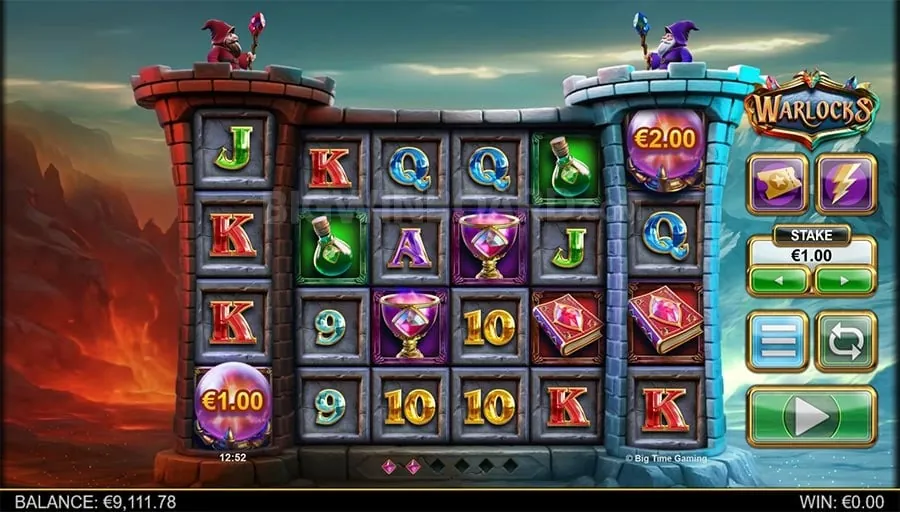
Slot machines are perhaps the most popular Gaming category in any Online Casino. The probability of hitting a winning combination is determined by a Random Number Generator (RNG). Each spin is an independent event, meaning past results do not influence future outcomes. The RTP percentage is the key indicator here, telling you the theoretical payout over time. Games with higher RTPs (e.g., 96% or more) generally offer better value. Always check the game's information for its RTP before playing.
Blackjack
Blackjack is a game where skill and probability intertwine. The probability of getting a certain card changes with every card dealt from the shoe. Players use basic strategy, which is mathematically derived to minimize the house edge, by making decisions (hit, stand, double down, split) based on their hand and the dealer's upcard. Understanding the probability of busting with an extra card or the dealer busting is crucial for effective play.
Roulette
Roulette is a classic game of pure chance. The probability of landing on a specific number or color is fixed. For example, in European roulette (single zero), the probability of hitting a single number is 1/37 (approximately 2.7%). The house edge comes from the single (or double) zero pocket. Different bets have different probabilities and payouts. Understanding these probabilities helps you choose bets that align with your risk tolerance.
Baccarat
Baccarat is another game with a relatively low house edge, especially on the Banker bet. The probabilities are fixed, and there's little strategy involved beyond choosing which hand to bet on (Player, Banker, or Tie). The Banker bet typically has a slightly higher probability of winning, hence the commission charged on Banker wins. Knowing these probabilities can guide your betting choices.
Poker (Video Poker)
While live poker involves skill against other players, video poker is a game against the machine where probability is paramount. Players are dealt five cards and choose which to hold or discard to form the best possible poker hand. Understanding the probabilities of drawing certain cards to complete a winning hand (e.g., a straight or a flush) is fundamental to making optimal decisions and maximizing your RTP. Some video poker variants offer RTPs close to 100% with perfect strategy.
Strategies for Applying Probability to Your Gaming
Applying probabilistic thinking can significantly enhance your Gaming experience. Here are some strategies:
- Game Selection: Prioritize games with a lower house edge or higher RTP. For example, European roulette generally has a better house edge than American roulette. In slots, always check the RTP before you play.
- Bankroll Management: Understand that probability works over the long run. Set a budget and stick to it. Don't chase losses, as this goes against probabilistic principles and can lead to further financial strain.
- Learn Basic Strategy: For games like blackjack and video poker, mastering basic strategy is crucial. These strategies are mathematically proven to give you the best possible odds against the house.
- Understand Volatility: In slots, volatility (or variance) refers to the risk level. High volatility slots offer less frequent but larger wins, while low volatility slots offer more frequent but smaller wins. Choose according to your bankroll and risk appetite.
- Utilize Free Play and Demos: Many Online Casino platforms, especially those catering to a Mobile-First audience like those in the PH Market, offer demo versions of games. Use these to understand the game mechanics and probabilities without risking real money.
Common Misconceptions and Responsible Gaming
It's easy to fall prey to common misconceptions when dealing with probability:
- The Gambler's Fallacy: This is the mistaken belief that if an event has occurred more frequently than normal in the past, it is less likely to happen in the future (or vice versa). For example, if a coin lands on heads five times in a row, the probability of it landing on heads on the sixth flip is still 50/50. Each event is independent.
- Hot and Cold Streaks: